 Saints Light
The Renunciation of Sin and the Profession of Faith: What Are You Really Saying I Do To?
At Baptism we say no to Satan, sin and evil's lies, and yes to the Father, the Son and the Holy Spirit. These promises are the root of the Creed and are renewed for life.
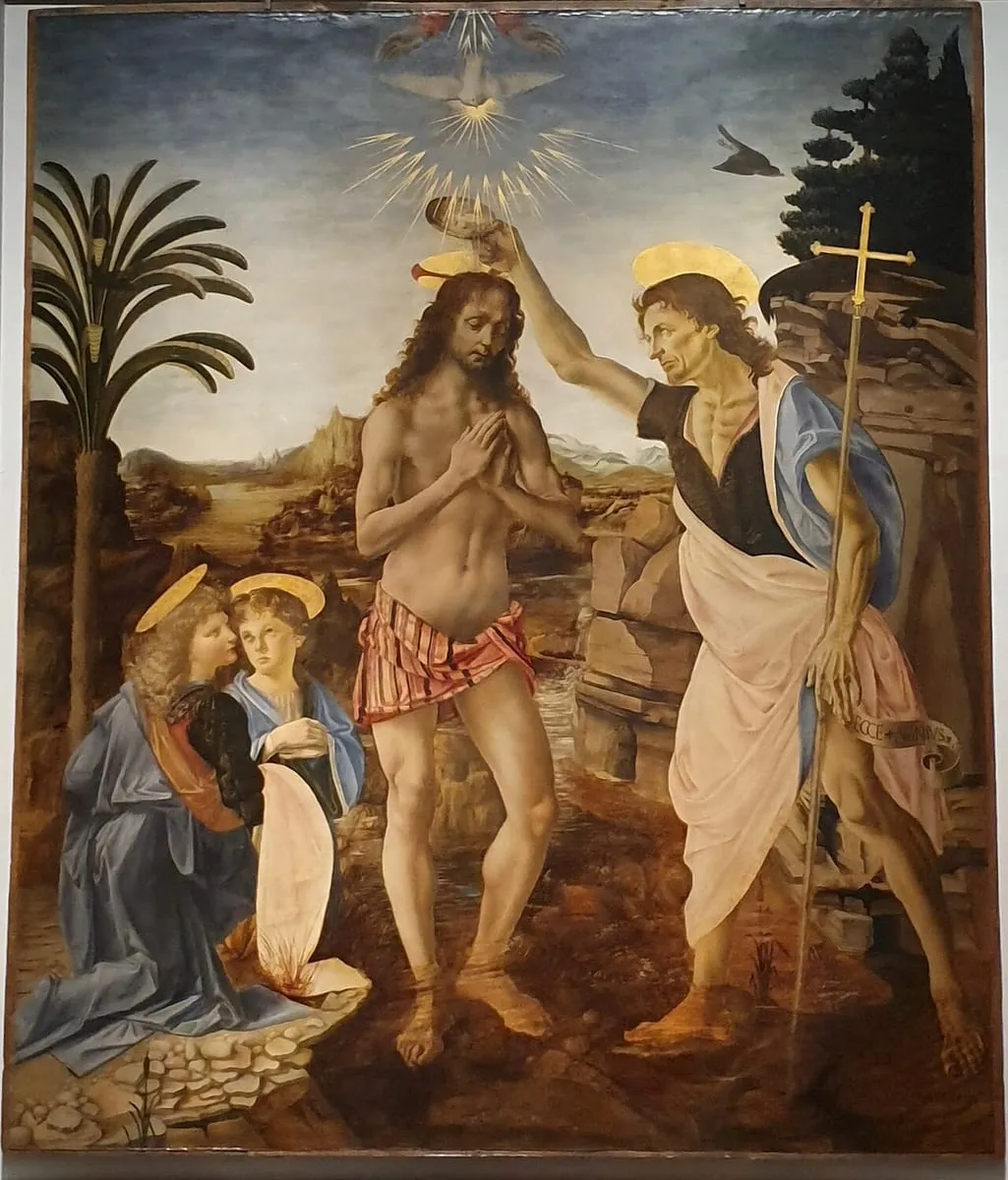
Just before the water is poured, the Church asks two sets of questions. First you say no, and then you say yes. Adults answer for themselves. At an infant's Baptism, the parents and godparents answer, promising for the child what the child would say if he or she could speak (CCC 1237, 1253).
The renunciation. The celebrant asks whether you reject (or renounce) Satan, all his works and all his empty promises. Another form asks the same thing in steps: rejecting sin, rejecting the false shine that makes evil look attractive, and rejecting Satan, the father of sin. Each time you answer: I do.
This is not theatre. Scripture speaks plainly of a real enemy who prowls like a roaring lion. The Church teaches that Satan is a fallen angel who freely rejected God; he is powerful, but only a creature, and he cannot stop God's kingdom (CCC 391-395). His works are sin in all its forms. His empty promises are the old lies: you will be happy if you get your own way; you are worth only what you achieve; you are too far gone to be forgiven. To renounce them is to say: I will not build my life on those lies anymore.
The profession of faith. Then come three questions, one for each Person of the Trinity. The first asks whether you believe in God the Father almighty, creator of heaven and earth. The second asks about Jesus Christ, his only Son, born of the Virgin Mary, who suffered, died, rose from the dead and is seated at the right hand of the Father. The third asks about the Holy Spirit, the holy Catholic Church, the communion of saints, the forgiveness of sins, the resurrection of the body and life everlasting. To each you answer: I do.
These questions are the oldest form of the Creed. The Apostles' Creed grew out of this very baptismal questioning, which is why the Church calls it first of all the baptismal creed (CCC 189). When you say I do, you are not just agreeing to ideas. You are handing yourself over to Persons: to the Father who made you, the Son who saved you, and the Spirit who makes you holy. Then the whole community joins in, declaring that this is the faith of the Church, and they are glad to profess it.
Notice the order: no, then yes. Every real commitment works this way. A couple who marry say yes to each other and so say no to everyone else. Baptism is the same. You cannot give God a full yes while keeping a door open to what destroys you.
Every Easter the whole Church renews these same promises (CCC 1254), and they are made again before Confirmation (CCC 1298). The I do of Baptism is meant to be said again and again, for the rest of your life.
Key points
- Before Baptism we first renounce Satan, sin and evil's empty promises, and then profess faith in the Trinity.
- The renunciation takes seriously a real enemy, but one who is only a creature and cannot defeat God.
- The three questions of faith are the root of the Apostles' Creed, the baptismal creed.
- These promises are renewed every Easter and are meant to shape every day of a Christian's life.
The Word of God
But if it seem evil to you to serve the Lord, you have your choice: choose this day that which pleaseth you, whom you would rather serve, whether the gods which your fathers served in Mesopotamia, or the gods of the Amorrhites, in whose land you dwell: but as for me and my house we will serve the Lord.
Be sober and watch: because your adversary the devil, as a roaring lion, goeth about seeking whom he may devour. Whom resist ye, strong in faith: knowing that the same affliction befalls your brethren who are in the world.
I call heaven and earth to witness this day, that I have set before you life and death, blessing and cursing. Choose therefore life, that both thou and thy seed may live:
Catechism paragraphs for this lesson
- CCC 189
- CCC 391-395
- CCC 1237
- CCC 1253-1254
- CCC 1298
CCC means the Catechism of the Catholic Church. Saints Light teaches it in its own words and never quotes it. Look up any paragraph in a printed copy or at vatican.va. See every lesson by paragraph in the Catechism index.
From the tradition
Q. What do we promise in Baptism? A. In Baptism we promise to renounce the devil with all his works and pomps.
Live it this week
Write down one empty promise you have believed, such as I would be happy if only I had more, and next to it write the truth God tells you instead. Then pray the Apostles' Creed slowly once a day this week, pausing after each part to say: I do.
Check yourself: three questions
1. Why does the renunciation of Satan come before the profession of faith?
- Because it is the less important part and is said first to get it over with
- Because a real yes to God also means saying no to what is opposed to him
- Because the Church believes Satan is as powerful as God
- Because only adults make the renunciation, while infants profess faith
Show the answer
Because a real yes to God also means saying no to what is opposed to him. The lesson compares it to marriage: a full yes to one means no to everything opposed. The Church also teaches Satan is only a creature (CCC 395).
2. Where does the Apostles' Creed come from?
- It was written by a council in the sixteenth century
- It was composed for the Mass and later added to Baptism
- It is a modern summary written for catechism classes
- It grew out of the three questions of faith asked at Baptism
Show the answer
It grew out of the three questions of faith asked at Baptism. The Church calls the Creed first of all the baptismal creed, because it grew out of the baptismal profession of faith (CCC 189).
3. When an infant is baptized, who makes the renunciation and profession of faith?
- The parents and godparents, promising for the child what the child would say
- The priest alone, on behalf of the whole parish
- No one; these parts are left out at infant Baptisms
- The child, later, when he or she is confirmed
Show the answer
The parents and godparents, promising for the child what the child would say. The parents and godparents answer for the child, as the Baltimore Catechism and CCC 1253 explain; the child later renews the promises personally.
Words to know
- Renunciation
- The solemn rejection of Satan, sin and evil made just before Baptism.
- Profession of faith
- The answers of faith in the Father, the Son and the Holy Spirit made at Baptism, the root of the Creed.
More terms in the Catholic glossary. More passages in the Scripture index.
For catechists: a one hour class plan
Goal. Help the group understand the promises they or their children will make, so that their I do is honest and wholehearted.
Opener. Ask: Have you ever made a promise that cost you something, a vow, a contract, a commitment to a friend or a team? What did you have to give up to keep it? Let a few share, then explain that Baptism includes both a giving up and a giving over.
Discussion questions
- What empty promises does our culture offer that people believe today? [Collect examples: money, image, control, pleasure. Keep it concrete and kind.]
- Some people feel uneasy talking about Satan. Why does the Church take him seriously, and why is that not a reason for fear? [He is real but only a creature, and Christ has already won (CCC 391-395, 1 Peter 5:8-9).]
- Which line of the profession of faith is easiest for you to say I do to, and which is hardest? [Let people be honest. Doubts are not failures; they are things to bring to God and to the catechist.]
- Parents and godparents: what does it mean to say I do on behalf of a child? [You are promising to live this faith yourself, so the child can see it.]
Activity. Hand out the text of the Apostles' Creed with space beside each line. Have everyone read it silently and mark each line with one of three symbols: a heart for lines they love, a question mark for lines they want to understand better, and a star for lines they want to live more fully. After ten minutes, invite volunteers to share a question mark, and answer briefly or note it for a later session. Then pray the Creed aloud together, pausing after each part for everyone to say: I do.
Closing prayer. Lord God, we reject sin and every empty promise of the evil one. We believe in you, Father, Son and Holy Spirit. Strengthen our faith, guard our hearts, and help us choose life every day, so that we and our families may serve you. Amen.
Timing. 0 to 5 minutes: welcome and opener. 5 to 20: teach the renunciation and profession from the lesson. 20 to 35: discussion. 35 to 50: Creed marking activity and shared prayer. 50 to 55: questions. 55 to 60: closing prayer.
Related lessons
- I believe in God, the Father almighty, Creator of heaven and earth (The Creed, free)
- What Are the Scrutinies? (Becoming Catholic, free)
- What Will Happen at the Easter Vigil? (Becoming Catholic, free)
- After Easter: How Do I Not Drift Away? (Becoming Catholic, free)
Keep your place in the app
Preparing for Baptism is free in the Saints Light app too, where you can mark each lesson done, take it as a guided class and keep notes.
Every course is open free for your first 14 days. After that, one payment of $14.99 unlocks every course. There is no subscription.