 Saints Light
I believe in God, the Father almighty, Creator of heaven and earth
The Creed is the apostles' faith in summary, and its first line says that God is a loving Father, all powerful, and the maker of everything that exists.
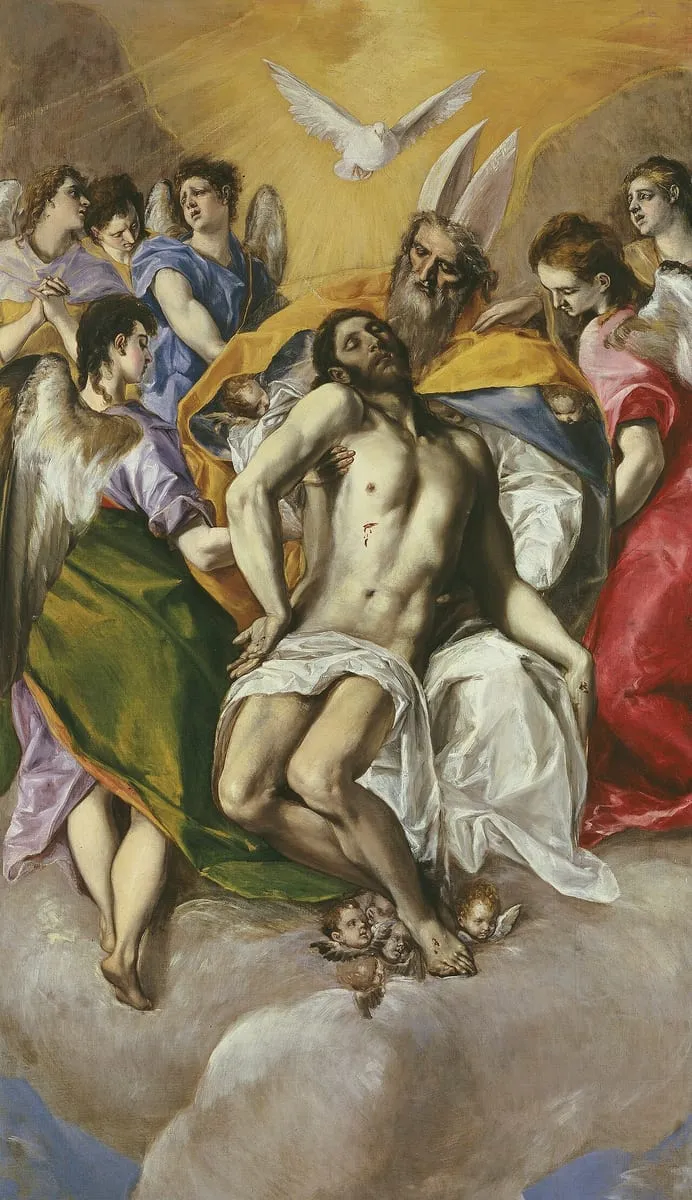
First, where this prayer comes from. The Church calls it the Apostles' Creed because it is a faithful summary of the apostles' faith. It grew out of the ancient baptismal creed of the Church of Rome, the questions put to new Christians as they were baptized (CCC 194). A shorter form was in use at Roman baptisms by the 200s, and the wording we pray today was settled by the 700s. An old story says each of the twelve apostles contributed one line. That story is a pious legend, not history, but the faith it expresses truly is theirs.
A creed is also called a symbol. The Greek word symbolon meant half of a broken token; two people proved who they were by fitting their halves together (CCC 188). Saying the Creed is how Christians recognize one another. It is built in three parts: God the Father and creation, the Son and our redemption, and the Holy Spirit and our sanctification (CCC 190).
It begins with I believe. Faith is a personal act, a free yes to God who reveals Himself, but it is never a private one. Each believer says I believe within the faith of the whole Church (CCC 166-167).
God is Father in two senses. He is the origin of everything and cares for us like a father. But Jesus revealed a deeper sense: God is eternally Father of His only Son (CCC 238-240). Through Baptism we are drawn into that relationship and may call Him our Father too.
Almighty is the only attribute of God named in the Creed (CCC 268). His power is universal, loving, and often mysterious. As the angel told Mary, no word shall be impossible with God. The obvious objection is evil and suffering: if God is all powerful, why does He allow them? The Church admits that this can test our faith, and points to the cross, where God's power showed itself in what looked like weakness and defeat, and where evil was overcome from within (CCC 272).
Creator of heaven and earth means everything, visible and invisible, including the angels (CCC 325-327). God did not shape some material that was already lying around. He made all things from nothing, and He holds them in being at every moment (CCC 296, 301). Nothing is outside His care, including you.
Key points
- The Apostles' Creed grew from the baptismal creed of the early Church of Rome.
- God is Father as Creator and, above all, as the eternal Father of the Son.
- Almighty is the only divine attribute named in the Creed, and His power is loving.
- God made everything, visible and invisible, from nothing, and sustains it all.
The Word of God
In the beginning God created heaven, and earth.
Because no word shall be impossible with God.
One God and Father of all, who is above all, and through all, and in us all.
Catechism paragraphs for this lesson
- CCC 185-197
- CCC 238-240
- CCC 268-274
- CCC 279
- CCC 325-327
CCC means the Catechism of the Catholic Church. Saints Light teaches it in its own words and never quotes it. Look up any paragraph in a printed copy or at vatican.va. See every lesson by paragraph in the Catechism index.
From the tradition
Q. Where shall we find the chief truths which the Church teaches? A. We shall find the chief truths which the Church teaches in the Apostles' Creed.
Q. Who is God? A. God is the Creator of heaven and earth, and of all things.
Live it this week
Learn the Apostles' Creed by heart this week if you do not know it yet. Say it once each morning, slowly, and stop for a breath after the first line to thank God the Father for one thing He made.
Check yourself: three questions
1. Why is it called the Apostles' Creed?
- Because it is a faithful summary of the apostles' faith
- Because the apostles wrote it together in one afternoon
- Because it is found word for word in the Acts of the Apostles
- Because only apostles were allowed to say it
Show the answer
Because it is a faithful summary of the apostles' faith. It is rightly considered a faithful summary of the apostles' faith; the idea that each apostle wrote a line is a legend (CCC 194).
2. What did the Greek word symbolon originally mean?
- A painted religious image
- A secret password spoken aloud
- Half of a broken token used to prove identity
- A book of laws
Show the answer
Half of a broken token used to prove identity. Symbolon meant half of a broken object, fitted together as a sign of recognition (CCC 188).
3. How does the Church answer the objection that evil disproves an almighty God?
- By saying evil is only an illusion
- By saying God is not really almighty after all
- By saying suffering is always a punishment for personal sins
- By pointing to the cross, where God overcame evil in apparent weakness
Show the answer
By pointing to the cross, where God overcame evil in apparent weakness. The lesson notes that faith in the Father almighty can be tested by evil, and the Church points to Christ's cross (CCC 272).
Words to know
- Creed
- From the Latin credo, I believe: a short, authoritative summary of the faith.
- Symbol of faith
- Another name for a creed, from a Greek word for a token of recognition.
More terms in the Catholic glossary. More passages in the Scripture index.
For catechists: a one hour class plan
Goal. The group should understand where the Apostles' Creed comes from and what its first line says, and take to heart that God is a loving Father, almighty and the maker of all that exists.
Opener. Ask: "When did you first learn the Creed, if you did, and what did you think it meant then?" Some will have said it for decades; others will be new. Both are welcome.
Discussion questions
- The Creed grew from the baptismal questions of the early Church of Rome. Why might it matter that it began as a profession made at Baptism? [It is a personal yes, not a list of opinions.]
- What does it mean to call God Father? [Above all, the eternal Father of the Son, and our Creator. Be sensitive: some had painful fathers. God is the Father we always needed, not a copy of a human one.]
- Almighty is the only attribute named in the Creed. Why do you think the Church singled it out? [His power is loving (Luke 1:37). Watch for people who feel God's power is distant or threatening.]
- If God made everything from nothing and keeps it in being, how should that change the way we see the world? [Gratitude, care for creation, trust.]
Activity. Say the Apostles' Creed together slowly, with a pause after each line. Then hand out the text and give 8 minutes for each person to circle the line they understand least and the line they love most. Collect the "least understood" lines on a board to look forward to in later weeks.
Closing prayer. God our Father, almighty and loving, You made heaven and earth and You made each of us. Thank You for the gift of this world and for the gift of our lives. Help us trust You as Your children and say our faith with our whole hearts. Amen.
Timing. Opening prayer 5 min, opener 5 min, read the lesson together 15 min, discussion 18 min, activity 12 min, closing (pray the Creed) 5 min.
Related lessons
- The Creed and the Prayer of the Faithful (The Mass)
- The Renunciation of Sin and the Profession of Faith: What Are You Really Saying I Do To? (Baptism, free)
- Why Call Priests "Father"? (Hard Questions)
Keep your place in the app
The Apostles' Creed, Line by Line is free in the Saints Light app too, where you can mark each lesson done, take it as a guided class and keep notes.
Every course is open free for your first 14 days. After that, one payment of $14.99 unlocks every course. There is no subscription.