 Saints Light
Mary and the Saints: The Family of God
The Church is one family in heaven and on earth, so we ask Mary and the saints to pray for us. We honor them, but we worship God alone.
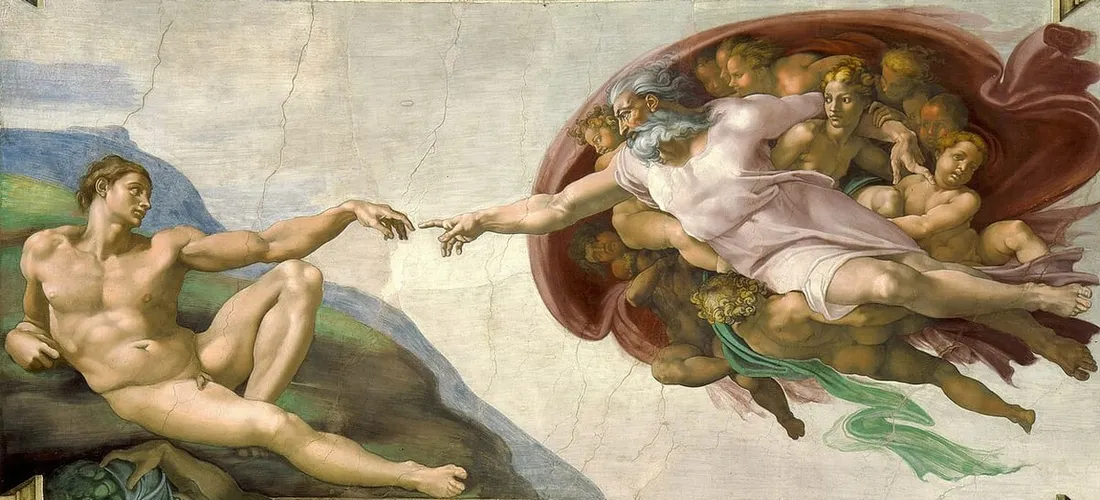
When you become a Christian, you do not just join a club. You join a family that includes those on earth, those being purified after death, and those already in heaven. The Church calls this the communion of saints (CCC 954). Death does not break the bonds of love between members of Christ's Body.
So Catholics ask the saints to pray for them, just as you might ask a friend at church to pray for you. Scripture says the prayer of a just man avails much, and no one is more just than those who now see God. Their prayers do not compete with Christ; they flow from their closeness to Him (CCC 956).
Do Catholics worship Mary and the saints? No. Adoration belongs to God alone. Mary and the saints receive honor, the way we honor heroes or parents, and Mary receives the highest honor of all, but devotion to her is essentially different from the adoration given to God (CCC 971). Statues and images are like family photos: the honor passes to the person shown, not to the stone or paint (CCC 2132).
Why so much attention to Mary? Because what the Church believes about Mary flows from what she believes about Jesus (CCC 487). Mary is the Mother of God, defined at Ephesus in 431, because her son is God. She remained ever virgin. By a unique grace she was preserved from original sin from the first moment of her conception: the Immaculate Conception, defined as dogma in 1854 (CCC 490-492). At the end of her life she was taken body and soul into heaven: the Assumption, defined in 1950 (CCC 966).
Her role never takes anything from Christ, the one mediator. It shows His power (CCC 970). From the cross Jesus gave her to the beloved disciple: Behold thy mother. Christians have always heard that as said to them too. And she herself foretold that all generations would call her blessed.
Some Catholics love apparitions such as Lourdes or Fatima. The Church approves some of these as worthy of belief, but they are private revelation: helpful, never required (CCC 67). When the Church canonizes a saint, she declares that this person lived heroic virtue and is with God, and offers them to us as models and intercessors (CCC 828).
Key points
- The communion of saints unites believers on earth, in purification, and in heaven.
- Catholics honor Mary and the saints and ask their prayers, but worship God alone.
- Mary is Mother of God, ever virgin, immaculately conceived, and assumed into heaven.
- Everything the Church teaches about Mary points to Christ and serves faith in Him.
The Word of God
Because he hath regarded the humility of his handmaid; for behold from henceforth all generations shall call me blessed.
When Jesus therefore had seen his mother and the disciple standing whom he loved, he saith to his mother: Woman, behold thy son. After that, he saith to the disciple: Behold thy mother. And from that hour, the disciple took her to his own.
And therefore we also having so great a cloud of witnesses over our head, laying aside every weight and sin which surrounds us, let us run by patience to the fight proposed to us:
Catechism paragraphs for this lesson
- CCC 954-957
- CCC 487-493
- CCC 963-971
- CCC 828
- CCC 2132
CCC means the Catechism of the Catholic Church. Saints Light teaches it in its own words and never quotes it. Look up any paragraph in a printed copy or at vatican.va. See every lesson by paragraph in the Catechism index.
From the tradition
Q. Does the first Commandment forbid the honoring of the saints? A. The first Commandment does not forbid the honoring of the saints, but rather approves of it, because by honoring the saints, who are the chosen friends of God, we honor God Himself.
Live it this week
Choose one saint this week, perhaps the one you are named after or whose feast falls this week. Read a short life of that saint, and ask him or her each day to pray for one specific need.
Check yourself: three questions
1. Do Catholics worship Mary?
- Yes, as a fourth divine Person
- Yes, but only on her feast days
- No, she is honored, but adoration belongs to God alone
- No, Catholics do not pay her any special attention
Show the answer
No, she is honored, but adoration belongs to God alone. Devotion to Mary differs essentially from the adoration given to God alone (CCC 971).
2. What does the Immaculate Conception refer to?
- Mary being preserved from original sin from her conception
- Jesus being conceived without a human father
- Mary being taken body and soul into heaven
- The birth of John the Baptist
Show the answer
Mary being preserved from original sin from her conception. The Immaculate Conception means Mary was preserved from original sin from the first moment of her conception, defined in 1854 (CCC 490-492).
3. Why do Catholics ask saints to pray for them?
- Because Christ cannot hear prayers directly
- Because saints are more powerful than God
- Because it is required to be saved
- Because the family of God is not broken by death, and the saints are close to Christ
Show the answer
Because the family of God is not broken by death, and the saints are close to Christ. The saints, being closely united to Christ, intercede for us within the one communion of saints (CCC 954-956).
Words to know
- Communion of saints
- The union of all believers in Christ: on earth, in purification, and in heaven.
- Intercession
- Praying on behalf of someone else.
- Immaculate Conception
- Mary's preservation from original sin from the first moment of her existence.
More terms in the Catholic glossary. More passages in the Scripture index.
For catechists: a one hour class plan
Goal. The group should understand that the Church is one family in heaven and on earth, that Catholics honor Mary and the saints and ask their prayers but worship God alone, and that everything about Mary points to Christ.
Opener. Ask: "Who has prayed for you in your life, a grandmother, a friend, a whole parish? How did you know?" Let people share. Then ask: "Would death stop that person from loving you?"
Discussion questions
- What is the difference between asking a friend to pray for you and asking a saint to pray for you? [Death does not break the bonds of love in Christ's Body. Members from other Christian backgrounds may find this new; welcome questions warmly.]
- How would you explain to a friend that Catholics do not worship Mary? [Worship belongs to God alone; we honor Mary as Christ's mother. The lesson's key point says this clearly.]
- Why do you think Jesus gave Mary to John at the cross (John 19:26-27)? [Many Christians have seen John as standing for all disciples. Mary is given to us as a mother.]
- Is there a saint you feel drawn to, or one you are named after? [Encourage people to choose one to get to know this week.]
Activity. Bring a few short saint biographies, holy cards, or use the app to look some up. In pairs, each person picks a saint (for example their name saint or the saint of the day), reads a short life, and tells their partner one thing that surprised them (12 minutes total). Then each writes a one line request to that saint for the week.
Closing prayer. Lord God, thank You for the great family of Your Church, on earth and in heaven. Thank You for Mary, who said yes to You, and for all the saints who show us the way. May they pray for us, and may we follow Your Son as faithfully as they did. Amen.
Timing. Opening prayer 5 min, opener 5 min, read the lesson together 15 min, discussion 18 min, activity 12 min, closing 5 min.
Related lessons
- the holy catholic Church, the communion of saints (The Creed, free)
- The Immaculate Conception (Mary and the Saints)
- The Communion of Saints: Why Ask Them to Pray for Us? (Mary and the Saints)
- Do Catholics Worship Mary? (Mary and the Saints)
Keep your place in the app
Start Here: The Catholic Faith in Twelve Lessons is free in the Saints Light app too, where you can mark each lesson done, take it as a guided class and keep notes.
Every course is open free for your first 14 days. After that, one payment of $14.99 unlocks every course. There is no subscription.