 Saints Light
Living as a Christian: Love, Commandments and Virtue
Living as a Christian means loving God and neighbor, guided by the commandments and a formed conscience. Good habits, called virtues, grow with practice and with God's grace.
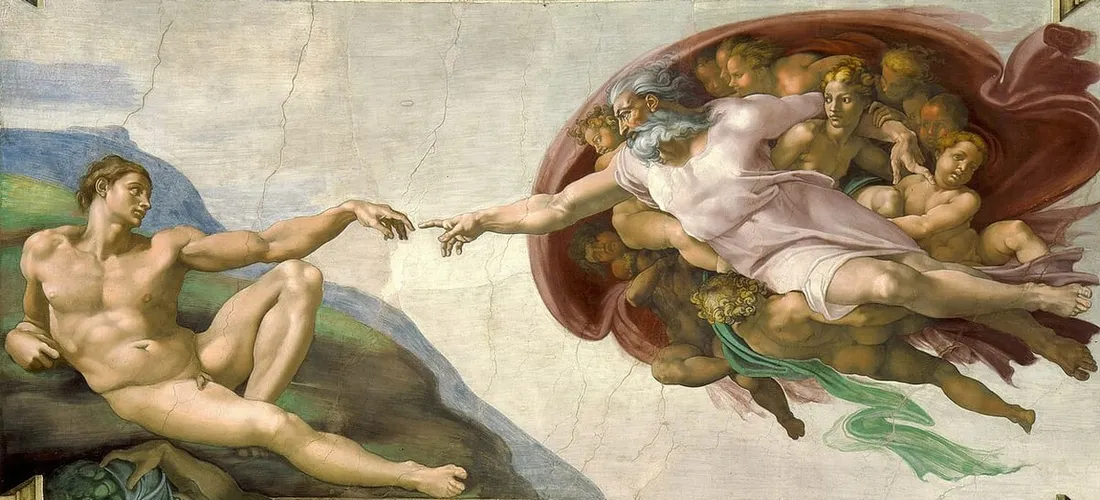
Catholic morality does not start with a rulebook. It starts with who you are. You are made in God's image, and through Baptism you share His life (CCC 1700). Christian living is learning to act like who you already are. Jesus put it simply: If you love me, keep my commandments. Obedience is love's answer, not love's price.
Jesus summed up the whole law in two commandments: love God with your whole heart, soul and mind, and love your neighbor as yourself (CCC 2055). The Ten Commandments spell out what that love requires. The first three concern love of God, the other seven love of neighbor (CCC 2067). The Church teaches they still bind Christians today (CCC 2068). They set the floor, not the ceiling.
To live this out you need a well formed conscience: the judgment of reason by which you recognize whether an act is good or evil (CCC 1778). Conscience is not a feeling or a private preference. It must be educated by Scripture, the Church's teaching and prayer (CCC 1783).
Sin is a failure in real love for God and neighbor (CCC 1849). Some sins are venial: they weaken love but do not destroy it. A sin is mortal when three things are all present: grave matter, full knowledge, and deliberate consent (CCC 1857). Mortal sin cuts us off from God's life in us, which is why the Church offers Confession as a sure road back.
The positive side is virtue: a firm habit of doing good (CCC 1803). The four cardinal virtues are prudence, justice, fortitude and temperance (CCC 1805). They grow like muscles, by practice. The three theological virtues, faith, hope and charity, are gifts from God that connect us directly to Him (CCC 1812-1813), and the greatest is charity.
Many people say, I am a good person, I do not need religion. But Christian goodness is not measured against the people around us. It is measured by love as Jesus lived it, and that is beyond our own strength. We need grace. The good news is that holiness is for everyone, not only priests and nuns (CCC 2013).
Key points
- Christian morality is love's response to God, not a way to earn His love.
- The Ten Commandments spell out love of God and neighbor and still bind us today.
- A sin is mortal only when grave matter, full knowledge and deliberate consent are all present.
- Virtues are good habits that grow by practice, and charity is the greatest.
The Word of God
If you love me, keep my commandments.
Jesus said to him: Thou shalt love the Lord thy God with thy whole heart, and with thy whole soul, and with thy whole mind. This is the greatest and the first commandment. And the second is like to this: Thou shalt love thy neighbour as thyself.
And now there remain faith, hope, and charity, these three: but the greatest of these is charity.
Catechism paragraphs for this lesson
- CCC 1776-1783
- CCC 1803-1805
- CCC 1812-1813
- CCC 1855-1857
- CCC 2052-2055
CCC means the Catechism of the Catholic Church. Saints Light teaches it in its own words and never quotes it. Look up any paragraph in a printed copy or at vatican.va. See every lesson by paragraph in the Catechism index.
From the tradition
Q. What is Charity? A. Charity is a Divine virtue by which we love God above all things for His own sake, and our neighbor as ourselves for the love of God.
Live it this week
Pick one of the four cardinal virtues this week (prudence, justice, fortitude or temperance) and choose one small daily act that practices it, such as pausing before you speak or skipping one indulgence. Each night, check how it went.
Check yourself: three questions
1. What three conditions together make a sin mortal?
- It is done in public, on purpose, and more than once
- It breaks a Church rule, a civil law, and a promise
- Grave matter, full knowledge, and deliberate consent
- It harms another person, is remembered, and is not confessed
Show the answer
Grave matter, full knowledge, and deliberate consent. A sin is mortal only when it involves grave matter, full knowledge and deliberate consent (CCC 1857).
2. How does the lesson describe the relation between obedience and love?
- Obedience is love's answer, not the price of being loved
- We must obey perfectly before God will love us
- Obedience and love have nothing to do with each other
- Love replaces the commandments, so they no longer apply
Show the answer
Obedience is love's answer, not the price of being loved. Jesus says, If you love me, keep my commandments; the lesson explains that obedience answers love (CCC 2068 confirms the commandments still bind).
3. Which are the four cardinal virtues?
- Faith, hope, charity and humility
- Prudence, justice, fortitude and temperance
- Wisdom, piety, counsel and fear of the Lord
- Patience, kindness, honesty and courage
Show the answer
Prudence, justice, fortitude and temperance. The cardinal virtues are prudence, justice, fortitude and temperance (CCC 1805).
Words to know
- Conscience
- The judgment of reason that recognizes whether an act is good or evil.
- Virtue
- A firm habit of doing good.
- Mortal sin
- A grave sin, committed with full knowledge and deliberate consent, that destroys charity in the soul.
More terms in the Catholic glossary. More passages in the Scripture index.
For catechists: a one hour class plan
Goal. The group should understand that Christian morality is love's answer to God, guided by the commandments and a formed conscience, and that virtues grow with practice and grace.
Opener. Ask: "Think of someone you admire for their character. What habits made them that way?" Collect a few answers. Point out that the Church calls those habits virtues.
Discussion questions
- Jesus said, if you love me, keep my commandments (John 14:15). How is obedience an answer to love rather than a price for it? [Compare keeping promises to a spouse or friend out of love. Watch for people who grew up with fear based religion; be gentle.]
- The lesson says a sin is mortal only with grave matter, full knowledge and deliberate consent. Why is that helpful? [It protects against both scrupulosity and carelessness. If someone starts to describe their own sins, kindly suggest they bring it to Confession or the priest.]
- Do the Ten Commandments still bind us today? [Yes, they spell out love of God and neighbor. Keep this practical, not political.]
- Which of the four cardinal virtues do you most need right now? [Prudence, justice, fortitude, temperance. Invite honesty and a little humor.]
Activity. Read 1 Corinthians 13:4-7 aloud together. Then each person rereads it silently, replacing "charity" with their own name, and circles the phrase that is hardest for them (5 minutes). In pairs (7 minutes), share the phrase and one small act this week that practices it.
Closing prayer. Father, You made us in Your image and gave us Your commandments as a path of love. Help us choose the good in small things this week. Grow in us patience, courage, honesty and self-control, and above all, love. Amen.
Timing. Opening prayer 5 min, opener 5 min, read the lesson together 15 min, discussion 20 min, activity 12 min, closing 3 min.
Related lessons
- Conscience: Forming It and Following It (Grace and Virtue)
- The Cardinal Virtues: Prudence, Justice, Fortitude, Temperance (Grace and Virtue)
- What Is Sin? Mortal and Venial (Grace and Virtue)
- Faith, Hope and Charity (Grace and Virtue)
Keep your place in the app
Start Here: The Catholic Faith in Twelve Lessons is free in the Saints Light app too, where you can mark each lesson done, take it as a guided class and keep notes.
Every course is open free for your first 14 days. After that, one payment of $14.99 unlocks every course. There is no subscription.