 Saints Light
Creation, the Fall and Why the World Is Broken
God made a good world, but the first humans broke their friendship with Him, and we inherit that wound. God did not give up on us; He promised a Savior.
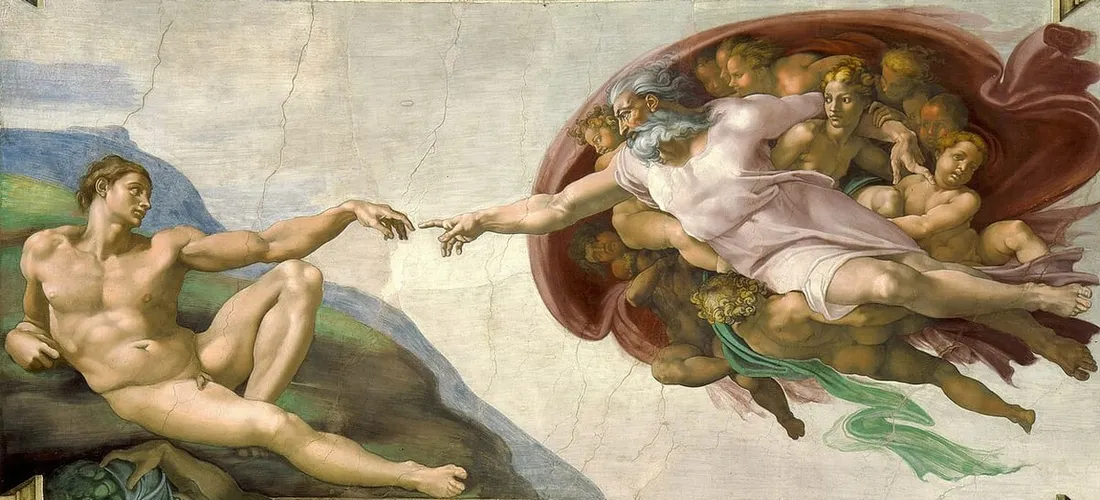
The Bible opens with a claim that shapes everything after it: in the beginning God created heaven and earth. God made all things out of nothing, freely, and with wisdom (CCC 295-297). Nothing exists that He did not make, and He keeps holding everything in being at every moment (CCC 301). And when He looked at what He had made, He saw that it was very good.
Catholics are not asked to read Genesis as a science textbook. The Church welcomes real scientific study of the age and development of the universe, and says that true faith and true science can never contradict each other, because the same God is the author of both (CCC 159, 283). Genesis answers the deeper questions: who made the world, why, and what has gone wrong.
God made the first human beings in His own image, body and soul, and in friendship with Him. They lived in harmony with God, with each other and with creation (CCC 374-376). Genesis 3 tells of their fall in figurative language, but the Church teaches it describes a real event at the start of human history (CCC 390). Tempted by the devil, man stopped trusting God and chose himself over God (CCC 397-398).
The harmony shattered. The body no longer obeyed the soul easily, man and woman grew suspicious of each other, creation became hostile, and death entered the world (CCC 400). We inherit this condition. Original sin is not a personal sin you committed; it is a human nature handed on without the holiness God first gave, wounded and inclined toward sin (CCC 404-405). That inclination is why doing good is so often hard.
Why does God allow evil at all? The Church does not pretend there is a tidy answer. It says no quick answer will do, and that only the whole Christian faith answers it (CCC 309). God permits evil only because He can bring a greater good out of it, and we see that most clearly in the cross, where the worst evil ever done became the source of our salvation (CCC 312, 324).
And God did not abandon us. Right after the fall, He promised that the woman's offspring would crush the serpent's head. Christians have always read this as the first announcement of a Savior (CCC 410-411). The world is broken, but the story is not over.
Key points
- God created everything out of nothing, freely, and all of it was good.
- Faith and science cannot truly conflict, because God is the author of both.
- Original sin is a wounded human nature we inherit, not a personal sin we committed.
- God permits evil only to bring a greater good, and He promised a Savior right after the fall.
The Word of God
And God saw all the things that he had made, and they were very good. And the evening and morning were the sixth day.
I will put enmities between thee and the woman, and thy seed and her seed: she shall crush thy head, and thou shalt lie in wait for her heel.
Wherefore as by one man sin entered into this world, and by sin death; and so death passed upon all men, in whom all have sinned.
Catechism paragraphs for this lesson
- CCC 295-301
- CCC 309-314
- CCC 396-401
- CCC 404-405
- CCC 410-412
CCC means the Catechism of the Catholic Church. Saints Light teaches it in its own words and never quotes it. Look up any paragraph in a printed copy or at vatican.va. See every lesson by paragraph in the Catechism index.
From the tradition
Q. Did God abandon man after he fell into sin? A. God did not abandon man after he fell into sin, but promised him a Redeemer, who was to satisfy for man's sin and reopen to him the gates of heaven.
Live it this week
Take a ten minute walk this week without headphones and notice three things in creation that are good. Thank God for each one by name, and then ask Him for help with one struggle you face because of our wounded nature.
Check yourself: three questions
1. What is original sin?
- A personal sin each baby commits at birth
- A wounded human nature we inherit, lacking the holiness God first gave
- The sin of eating forbidden food in general
- A myth with no real meaning for our lives
Show the answer
A wounded human nature we inherit, lacking the holiness God first gave. Original sin is not a personal fault but a human nature deprived of original holiness and inclined to sin (CCC 404-405).
2. What does the Church say about faith and science?
- Catholics must reject modern science about the universe
- Science has proved faith false
- Faith and science answer the same questions in competing ways
- True faith and true science cannot contradict, since God authors both
Show the answer
True faith and true science cannot contradict, since God authors both. The lesson cites CCC 159 and 283: there can be no real conflict between faith and reason.
3. How does God respond right after the fall in Genesis 3?
- He promises that the woman's offspring will crush the serpent
- He destroys the world and starts over
- He leaves humanity to fend for itself
- He declares that sin does not matter
Show the answer
He promises that the woman's offspring will crush the serpent. Genesis 3:15 is read as the first announcement of the Redeemer (CCC 410-411).
Words to know
- Original sin
- The wounded state of human nature we inherit from the first sin, without the holiness God first gave.
- Concupiscence
- The inclination toward sin that remains in us as a result of original sin.
More terms in the Catholic glossary. More passages in the Scripture index.
For catechists: a one hour class plan
Goal. The group should understand that God made a good world, that original sin is a wound we inherit, and that God answered the fall at once with the promise of a Savior.
Opener. Ask: "Think of something beautiful you saw this week, and something broken you saw this week." Take a few of each. Point out that the Bible holds both: a good creation and a wounded world.
Discussion questions
- Can a Catholic accept modern science? What does the lesson say about faith and science? [God is the author of both, so they cannot truly conflict. Avoid turning the session into a debate on evolution; offer to pass detailed questions to the priest.]
- Original sin is called a wound we inherit, not a sin we personally committed. Why is that distinction important? [No one is guilty of Adam's act; we inherit a nature that leans toward sin. This helps people who think Catholics teach that babies are "bad".]
- Why does God allow evil and suffering? [Be honest that this is the hardest question. The lesson says God permits evil only to draw a greater good from it. If someone is grieving, listen first and do not rush to an answer.]
- What does Genesis 3:15 tell us about God's response to the fall? [God promised a Savior right away. The story of salvation starts at the moment of the fall, not later.]
Activity. Read Genesis 1:26-31 and Genesis 3:1-15 aloud together, with different voices for the narrator, God, the serpent, Adam and Eve. Then in pairs (6 minutes), each shares one place in their own life where they see the same pattern: trust in God, a temptation to grab, and God still coming to look for us.
Closing prayer. Creator God, everything You made is good, and You never stopped loving us even when we turned away. Thank You for the beauty around us. Heal what is wounded in us, and help us trust You when the world feels broken. Amen.
Timing. Opening prayer 5 min, opener 5 min, read the lesson together 15 min, discussion 20 min, activity 12 min, closing 3 min.
Related lessons
- Why Does God Allow Suffering? (Hard Questions)
- Mary in Scripture: New Eve and Ark of the Covenant (Mary and the Saints)
Keep your place in the app
Start Here: The Catholic Faith in Twelve Lessons is free in the Saints Light app too, where you can mark each lesson done, take it as a guided class and keep notes.
Every course is open free for your first 14 days. After that, one payment of $14.99 unlocks every course. There is no subscription.