 Saints Light
Who Is Jesus? True God and True Man
Jesus is God the Son who became a real man, one Person who is fully divine and fully human. He did it to save us and bring us into God's own life.
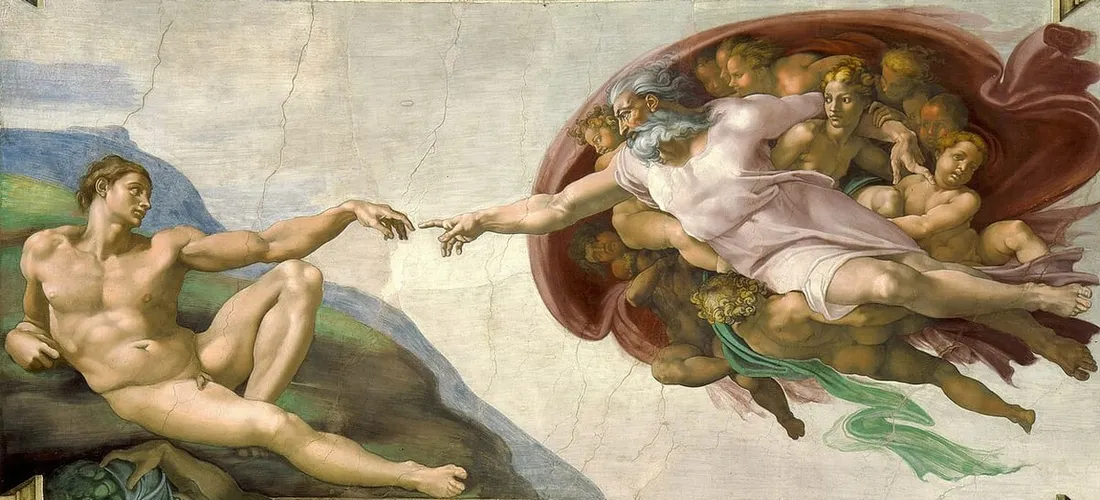
Jesus of Nazareth is a real man of history. He was born in the reign of Caesar Augustus, preached in Galilee and Judea, and was crucified under Pontius Pilate. Christians make an astonishing claim about Him: this man is God the Son, the second Person of the Trinity, who became one of us. This is the Incarnation, from the Latin for becoming flesh (CCC 461).
St John begins his Gospel: In the beginning was the Word, and the Word was God. Then he adds: And the Word was made flesh, and dwelt among us. God did not pretend to be human or borrow a body like a costume. He took a full human nature, with a human body, a human soul, a human mind and a human will (CCC 470).
So the Church confesses that Jesus is true God and true man: not half and half, not a mix, but one divine Person with two complete natures (CCC 464, 469). The early councils guarded this carefully. Nicaea (325) taught that the Son is one in being with the Father. Ephesus (431) taught that Jesus is one Person, so Mary is truly Mother of God. Chalcedon (451) taught that His two natures are united without confusion and without division (CCC 466-467).
Some say Jesus was a great teacher but never claimed to be God. The Gospels show otherwise. He forgave sins, which only God can do. He said, before Abraham was made, I am, using the divine name. He accepted Thomas calling Him my Lord and my God. A man who says these things is either deluded, deceiving, or telling the truth. Christians stake their lives on the third option.
Why did God become man? The Church gives four reasons: to save us by reconciling us with God, to show us how much God loves us, to be our model of holiness, and to make us sharers in the divine nature (CCC 456-460). God became what we are so that we could become, by grace, what He is.
This means God knows from the inside what it is to be tired, hungry, grieving and tempted. When you pray, you are not speaking to a distant idea. You are speaking to Someone who has a human heart.
Key points
- Jesus is a real historical person who is also God the Son made man.
- He is one divine Person with two complete natures, divine and human.
- The councils of Nicaea, Ephesus and Chalcedon defined this faith against errors.
- God became man to save us, show His love, model holiness and share His life with us.
The Word of God
In the beginning was the Word, and the Word was with God, and the Word was God.
And the Word was made flesh, and dwelt among us, (and we saw his glory, the glory as it were of the only begotten of the Father,) full of grace and truth.
Who being in the form of God, thought it not robbery to be equal with God: But emptied himself, taking the form of a servant, being made in the likeness of men, and in habit found as a man.
Catechism paragraphs for this lesson
- CCC 456-460
- CCC 461-463
- CCC 464-469
- CCC 470
CCC means the Catechism of the Catholic Church. Saints Light teaches it in its own words and never quotes it. Look up any paragraph in a printed copy or at vatican.va. See every lesson by paragraph in the Catechism index.
From the tradition
Q. What do you believe of Jesus Christ? A. I believe that Jesus Christ is the Son of God, the second Person of the Blessed Trinity, true God and true man.
Live it this week
Read John chapter 1 this week, slowly, twice. Then pray this short, ancient prayer at least once a day: Lord Jesus Christ, Son of God, have mercy on me, a sinner.
Check yourself: three questions
1. How does the Church describe Jesus?
- A man who became divine because of his holiness
- God who only appeared to have a human body
- One divine Person who is true God and true man
- Half God and half man, mixed together
Show the answer
One divine Person who is true God and true man. Jesus is one divine Person with two complete natures, inseparably true God and true man (CCC 464, 469).
2. Which council taught that Christ's two natures are united without confusion and without division?
- Chalcedon in 451
- Trent in 1545
- Vatican II in 1962
- Jerusalem in about 50
Show the answer
Chalcedon in 451. The lesson names Chalcedon (451) as the council that defined the two natures in one Person (CCC 467).
3. Which of these is one of the reasons the Church gives for the Incarnation?
- To prove that human nature needed no healing
- To make us sharers in the divine nature
- To replace the Father as the one we worship
- To end the need for faith by giving visible proof
Show the answer
To make us sharers in the divine nature. Among the four reasons in CCC 456-460 is that the Word became flesh to make us partakers of the divine nature.
Words to know
- Incarnation
- The Son of God taking a full human nature and becoming man in Jesus.
- Council
- A gathering of the world's bishops with the Pope that teaches with authority on faith and morals.
More terms in the Catholic glossary. More passages in the Scripture index.
For catechists: a one hour class plan
Goal. The group should understand that Jesus is one divine Person who is fully God and fully man, and should take to heart that God became one of us to save us and share His life with us.
Opener. Ask: "If someone at work asked you, Who do you think Jesus was?, what would you say in one sentence?" Let people answer honestly, including people who are unsure. Note the range of answers without correcting yet.
Discussion questions
- Why does it matter that Jesus is truly human and not God only pretending to be a man? [He shares our life, temptations and death from the inside, so He can save all of it. Watch for the idea that His humanity was a costume.]
- Why does it matter that He is truly God and not only a great teacher? [Only God can save us and bring us into God's life. You may mention C. S. Lewis's point that a mere man who said what Jesus said would not be a good teacher, without quoting.]
- The early councils (Nicaea, Ephesus, Chalcedon) argued about very precise words. Why would that matter to ordinary believers? [Getting Jesus wrong changes what salvation means. Keep this short; the point is that the Church guarded the faith, not a history lecture.]
- Of the reasons God became man (to save us, show His love, model holiness, share His life), which speaks most to you right now? [Invite personal answers. Any of the four is right.]
Activity. Read John 1:1-18 aloud slowly, twice, by two different readers. After the second reading, give 5 minutes of silence for each person to write one sentence to Jesus beginning with "Because You became man...". Close the activity by praying the Jesus Prayer from the lesson together three times.
Closing prayer. Lord Jesus, You are God the Son, and You became one of us. You know our joys and our tiredness from the inside. Thank You for coming so close. Help us know You better this week and follow You more closely. Lord Jesus Christ, Son of God, have mercy on us. Amen.
Timing. Opening prayer 5 min, opener 5 min, read the lesson together 15 min, discussion 20 min, activity 12 min, closing 3 min.
Related lessons
- who was conceived by the Holy Spirit, born of the Virgin Mary (The Creed, free)
- What Did the Great Councils Settle? (Church History)
- How Can Mary Be the Mother of God? (Mary and the Saints)
Keep your place in the app
Start Here: The Catholic Faith in Twelve Lessons is free in the Saints Light app too, where you can mark each lesson done, take it as a guided class and keep notes.
Every course is open free for your first 14 days. After that, one payment of $14.99 unlocks every course. There is no subscription.