 Saints Light
What Happens in the Rite of Baptism, Step by Step?
The rite moves from the church door to the font to the altar: the child is welcomed and signed with the cross, hears God's word, is anointed, baptized, clothed in white, given a light, and blessed.
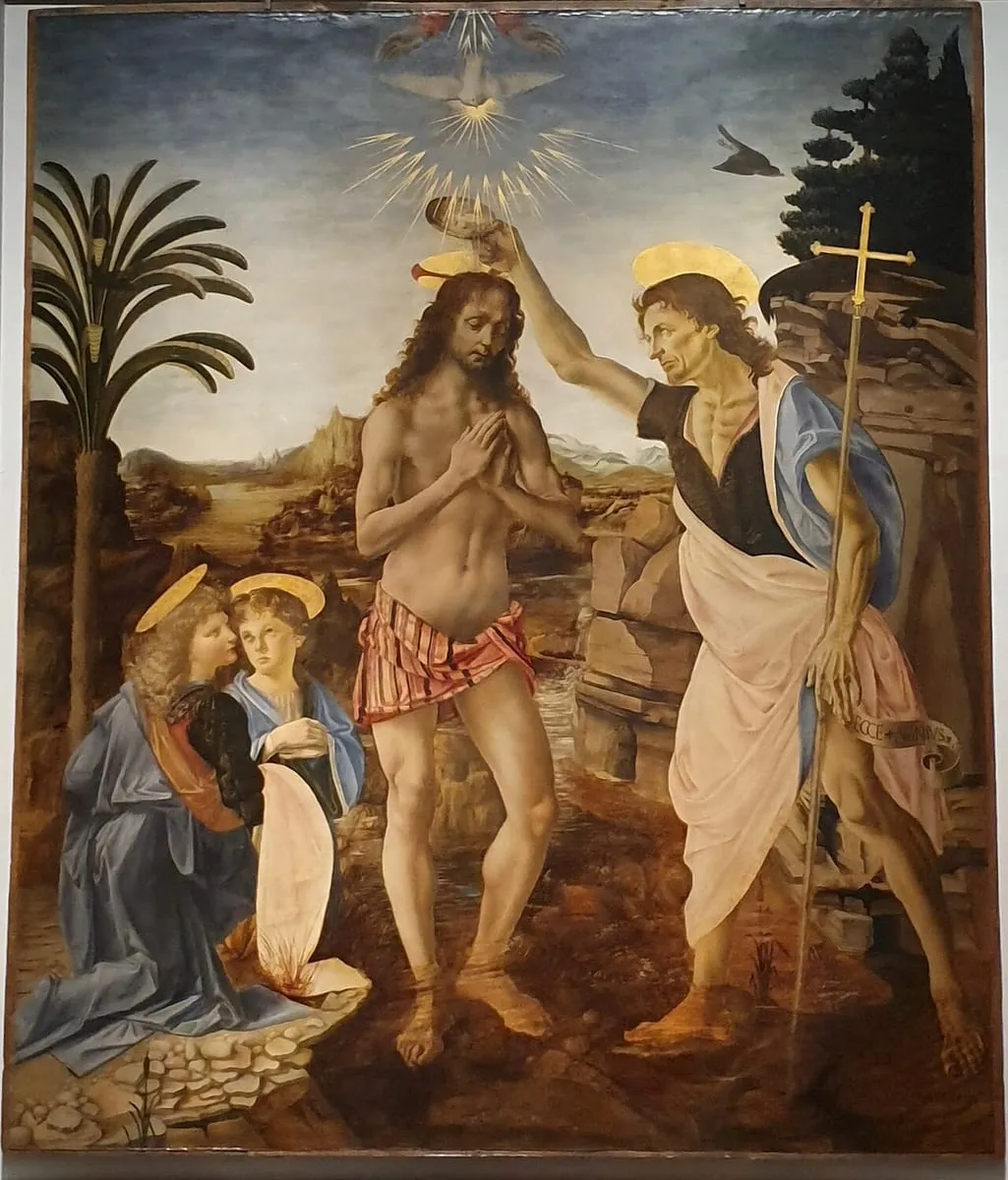
Every part of the rite of Baptism teaches something. If you know what is coming, you can pray it instead of only watching it. Here is the order used for children in the Roman Rite. The adult rite at the Easter Vigil follows much the same pattern (CCC 1234).
Welcome, questions and the sign of the cross. The celebration usually begins at the church door, since Baptism is the door into the Church. The priest or deacon asks the parents what name they give their child, and what they ask of God's Church. They answer simply: Baptism. (An adult asked the same question answers: Faith (CCC 1253).) The parents are asked whether they accept the duty of raising the child in the faith, and the godparents whether they will help. Then the celebrant claims the child for Christ by tracing a cross on the forehead, and invites the parents and godparents to do the same (CCC 1235).
The Word and the first anointing. One or more passages of Scripture are read and explained, followed by prayers for the child and family and a short litany calling on the saints (CCC 1236). The celebrant then prays a prayer of exorcism, asking God to free the child from the power of darkness, and anoints the chest with the oil of catechumens, the oil of strength for the struggle ahead (CCC 1237).
The water. At the font, the water is blessed with a prayer that recalls the Flood, the Red Sea and the Jordan, asking the Holy Spirit to come upon it (CCC 1238). The parents and godparents renounce sin and profess the faith (the subject of Lesson 8). Then the celebrant immerses the child or pours water over the head three times, saying the child's name and the words that name the Father, the Son and the Holy Spirit (CCC 1239-1240). This is the moment of Baptism itself; Lesson 10 gives the exact words.
The chrism, the garment and the candle. The crown of the head is anointed with sacred chrism, the perfumed oil blessed by the bishop: the newly baptized now shares in Christ's role as priest, prophet and king (CCC 1241). A white garment is placed on the child, a sign of having put on Christ. A candle is lit from the Easter candle and handed to a parent or godparent: Christ has enlightened this child, who is called to walk as a child of the light (CCC 1243).
The Ephphatha and the ending. The celebrant may touch the child's ears and mouth, recalling the day Jesus healed a deaf man with the Aramaic word Ephphatha, which means Be opened. The prayer asks that the child may soon hear God's word and proclaim it. Finally everyone goes to the altar, prays the Our Father together, and receives a blessing, with a special blessing for the mother and the father (CCC 1245).
Key points
- The rite begins at the door with the child's name, the parents' request and the sign of the cross.
- God's word is proclaimed, and the child is anointed with the oil of catechumens for strength.
- After the renunciation and profession of faith, the child is baptized with water and the Trinitarian words.
- Chrism, the white garment, the candle and the Ephphatha each show what the new Christian has become.
The Word of God
And looking up to heaven, he groaned, and said to him: Ephpheta, which is, Be thou opened. And immediately his ears were opened, and the string of his tongue was loosed, and he spoke right.
For you were heretofore darkness, but now light in the Lord. Walk then as children of the light.
Catechism paragraphs for this lesson
- CCC 1234-1237
- CCC 1238-1240
- CCC 1241-1245
CCC means the Catechism of the Catholic Church. Saints Light teaches it in its own words and never quotes it. Look up any paragraph in a printed copy or at vatican.va. See every lesson by paragraph in the Catechism index.
From the tradition
Q. Why is the name of a saint given in Baptism? A. The name of a saint is given in Baptism in order that the person baptized may imitate his virtues and have him for a protector.
Live it this week
Ask your parish if you can see the oils, the font and the Easter candle before the Baptism day. If you are a parent, decide where at home you will keep the baptismal candle and white garment so they can come out again each year.
Check yourself: three questions
1. Why does the celebration of an infant's Baptism usually begin at the church door?
- Because the church is too small for families to come inside
- Because Baptism is the door into the Church, and the child is welcomed in
- Because the font is always placed outside the building
- Because the parents must sign paperwork at the door first
Show the answer
Because Baptism is the door into the Church, and the child is welcomed in. The lesson explains that beginning at the door shows that Baptism is the entrance into the Church, followed by the welcome and sign of the cross (CCC 1235).
2. What does the white garment signify?
- That the baby comes from a wealthy family
- That the child has no need of Confession later in life
- That the newly baptized has put on Christ and risen with him
- That the child is now promised to the priesthood or religious life
Show the answer
That the newly baptized has put on Christ and risen with him. The white garment shows that the baptized has put on Christ (Galatians 3:27; CCC 1243).
3. What is the Ephphatha?
- An optional rite touching the ears and mouth, praying the child will hear and proclaim God's word
- The name of the oil used for the first anointing
- The prayer that blesses the water in the font
- The final blessing given to the mother
Show the answer
An optional rite touching the ears and mouth, praying the child will hear and proclaim God's word. The Ephphatha recalls Jesus healing a deaf man with the word Be opened (Mark 7:34) and asks that the child may hear and speak God's word.
Words to know
- Oil of catechumens
- Olive oil blessed by the bishop, used before Baptism as a sign of strength against evil.
- Chrism
- Perfumed oil consecrated by the bishop, used after Baptism, in Confirmation and in Holy Orders.
- Ephphatha
- An Aramaic word meaning Be opened, spoken by Jesus when he healed a deaf man; it names a short rite at the end of Baptism.
More terms in the Catholic glossary. More passages in the Scripture index.
For catechists: a one hour class plan
Goal. Walk the group through every part of the rite so that on the day they can pray it with understanding and calm.
Opener. Ask: Think of a wedding, graduation or other ceremony you attended. Which gesture or moment do you still remember, and why did it matter? Then explain that every gesture in Baptism also carries meaning, and today we will learn them all.
Discussion questions
- Which part of the rite are you most looking forward to, and which part are you nervous about? [Answer practical worries: where to stand, who holds the baby, what to say.]
- Why do you think there are two different anointings, one before the water and one after? [The first is strength for the struggle (CCC 1237); the second is the gift of the Spirit and a share in Christ's mission (CCC 1241).]
- What does it mean to you that your child (or you) will be handed a light from the Easter candle? [Connect it to Ephesians 5:8 and to keeping that light burning.]
- Why might the name given at Baptism matter? [Use the Baltimore Catechism answer about a saint's name, and CCC 2156 if helpful.]
Activity. Hold a walk-through in the church. Start at the door and have a parent answer the name question. Move to the place of the Word, then to the font. Show the oil stocks, the Easter candle and a white garment if available. Let parents and godparents practice tracing the cross on a doll's forehead or each other's, and show where they will stand and when they will answer. Leave time for every question.
Closing prayer. Lord Jesus, you opened the ears of the deaf and the mouth of the mute. Open our ears to hear your word and our mouths to praise you. Prepare us for the day of Baptism, and let these children shine as lights in the world. Amen.
Timing. 0 to 5 minutes: welcome and opener. 5 to 15: overview of the rite from the lesson. 15 to 40: walk-through in the church, stopping at each place. 40 to 50: discussion in the pews. 50 to 55: final practical questions. 55 to 60: closing prayer at the font.
Related lessons
- What Will Happen at the Easter Vigil? (Becoming Catholic, free)
- What Are the Scrutinies? (Becoming Catholic, free)
Keep your place in the app
Preparing for Baptism is free in the Saints Light app too, where you can mark each lesson done, take it as a guided class and keep notes.
Every course is open free for your first 14 days. After that, one payment of $14.99 unlocks every course. There is no subscription.