 Saints Light
suffered under Pontius Pilate, was crucified, died and was buried
Jesus really suffered, died on a Roman cross under Pontius Pilate, and was buried. He did it freely for the sins of all of us, and no group of people is to be singled out for blame.
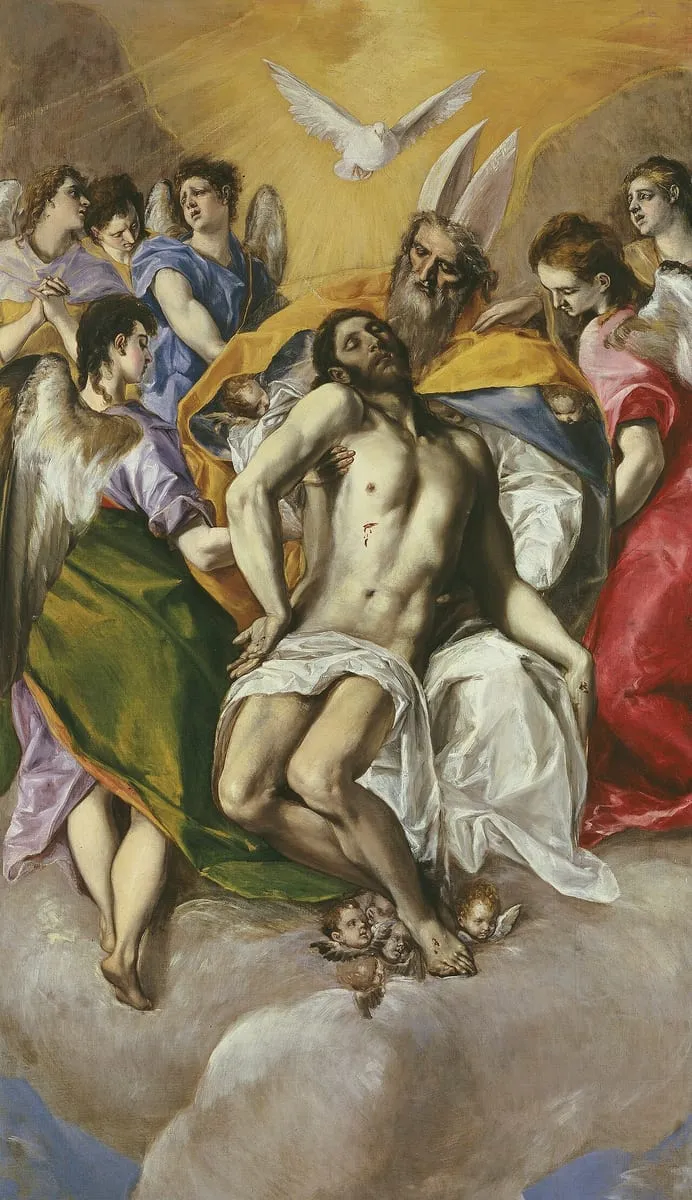
It is striking that the Creed names a Roman official. Pontius Pilate governed Judea for Rome from about the year 26 to 36. His name pins our faith to a real time and place. Christianity is not a set of timeless myths; it rests on events that happened in history, under a governor whose name appears in Roman records.
Suffered reminds us that Jesus' pain was real. He was arrested, mocked, scourged and crowned with thorns. He did not float above it. And He suffered freely, out of love, embracing in His human heart the Father's love for us (CCC 609).
Who was responsible for His death? The Church is clear that the Jewish people as a whole, then or now, cannot be blamed for it (CCC 597). The Church teaches instead that all sinners were the authors of Christ's Passion, and that Christians bear the heaviest responsibility, because we know Him and still sin (CCC 598). The finger points at each of us, not at others.
Was crucified names the cruelest death Rome used, meant for slaves and rebels. Yet from the cross Jesus prayed, Father, forgive them, for they know not what they do. His death is the one perfect sacrifice: love and obedience offered for all, healing the disobedience of sin (CCC 613-616). As St Peter wrote, He bore our sins in His body upon the tree.
Died means a real death. His soul separated from His body, as happens to every person who dies. But the divine Person of the Son stayed united to both His soul and His body, even in death (CCC 626, 630). Because of that union, His body did not see corruption in the tomb (CCC 627).
Was buried confirms that He truly died, and it is not a small detail. Holy Saturday, the day of the tomb, is a day of silence and waiting. In Baptism we are buried with Christ, going down into the water, so that we can rise with Him to new life (CCC 628). When you go through your own dark Saturdays, remember that Christ has been there before you.
Key points
- Naming Pontius Pilate anchors the faith in real history.
- The Jewish people as a whole are not to blame for Christ's death; all sinners share responsibility.
- Jesus' death on the cross is the one perfect sacrifice, freely offered out of love.
- He truly died and was buried, and in Baptism we are buried with Him to rise to new life.
The Word of God
And Jesus said: Father, forgive them, for they know not what they do. But they, dividing his garments, cast lots.
Who his own self bore our sins in his body upon the tree: that we, being dead to sins, should live to justice: by whose stripes you were healed.
Jesus therefore, when he had taken the vinegar, said: It is consummated. And bowing his head, he gave up the ghost.
Catechism paragraphs for this lesson
- CCC 571
- CCC 595-598
- CCC 609
- CCC 613-618
- CCC 624-630
CCC means the Catechism of the Catholic Church. Saints Light teaches it in its own words and never quotes it. Look up any paragraph in a printed copy or at vatican.va. See every lesson by paragraph in the Catechism index.
From the tradition
Q. What did Jesus Christ suffer? A. Jesus Christ suffered a bloody sweat, a cruel scourging, was crowned with thorns, and was crucified.
Live it this week
This Friday, pray the Stations of the Cross at your parish, or read Luke chapter 23 slowly at home. Afterward, forgive one person who has hurt you, in prayer, using Jesus' own words: Father, forgive them.
Check yourself: three questions
1. Why does the Creed mention Pontius Pilate?
- To honor him as a saint
- Because he wrote an account of the crucifixion
- Because Romans were solely to blame
- To anchor Christ's death in a real time and place in history
Show the answer
To anchor Christ's death in a real time and place in history. The lesson explains that naming Pilate ties the faith to datable history.
2. What does the Church teach about responsibility for Jesus' death?
- The Jewish people as a whole are guilty for all time
- All sinners are its authors, and Christians bear special responsibility
- Only Pilate is responsible
- No one is responsible because it was planned
Show the answer
All sinners are its authors, and Christians bear special responsibility. The Jews are not collectively responsible; sinners were the authors of the Passion (CCC 597-598).
3. What happened to Jesus' divine Person when He died?
- It remained united to both His soul and His body
- It left His body forever
- It ceased to exist until Easter
- It was replaced by an angel
Show the answer
It remained united to both His soul and His body. During His time in the tomb, the divine Person continued to be united to both His soul and His body (CCC 626, 630).
Words to know
- Passion
- The sufferings of Jesus, from His agony in the garden to His death on the cross.
- Holy Saturday
- The day Christ lay in the tomb, between Good Friday and Easter.
More terms in the Catholic glossary. More passages in the Scripture index.
For catechists: a one hour class plan
Goal. The group should understand that Jesus truly suffered, died and was buried under Pontius Pilate, freely, for the sins of all, and that no people as a whole is to be blamed for His death.
Opener. Ask: "Why do you think the Creed names a Roman governor, Pontius Pilate, of all people?" Let people guess. Then explain that it anchors our faith in real history.
Discussion questions
- The Church teaches that the Jewish people as a whole are not to blame for Christ's death. Why is this so important? [All sinners share responsibility. Name the sad history of Christian antisemitism honestly; this matters greatly.]
- What does it mean that Jesus freely offered His life? [He was not a victim of circumstance; He gave Himself out of love (1 Peter 2:24).]
- Jesus prayed, Father, forgive them (Luke 23:34). What does His forgiveness from the cross ask of us? [Forgiving others. Be careful with people who have suffered abuse: forgiveness does not mean pretending it was fine or returning to danger.]
- Why does it matter that Jesus really died and was buried? [He went all the way into death for us; in Baptism we are buried with Him to rise.]
Activity. Pray a short form of the Stations of the Cross together, either walking the stations in the church or reading them from a printed sheet. Choose five or six stations, read one sentence at each, and pause for silence. If walking is hard for some, sit and look at the images together.
Closing prayer. Lord Jesus, You suffered and died for each of us, and You forgave those who crucified You. We are sorry for our sins. Give us the grace to forgive those who have hurt us, and to love as You have loved us. Amen.
Timing. Opening prayer 5 min, opener 5 min, read the lesson together 15 min, discussion 17 min, activity (Stations) 15 min, closing 3 min.
Related lessons
- The Cross and Resurrection: How We Are Saved (Start Here, free)
Keep your place in the app
The Apostles' Creed, Line by Line is free in the Saints Light app too, where you can mark each lesson done, take it as a guided class and keep notes.
Every course is open free for your first 14 days. After that, one payment of $14.99 unlocks every course. There is no subscription.