 Saints Light
He descended into hell; on the third day He rose again from the dead
After He died, Jesus went to the realm of the dead to free the just who waited there, and on the third day He rose in a glorified body. His Resurrection is real, and it is the promise of ours.
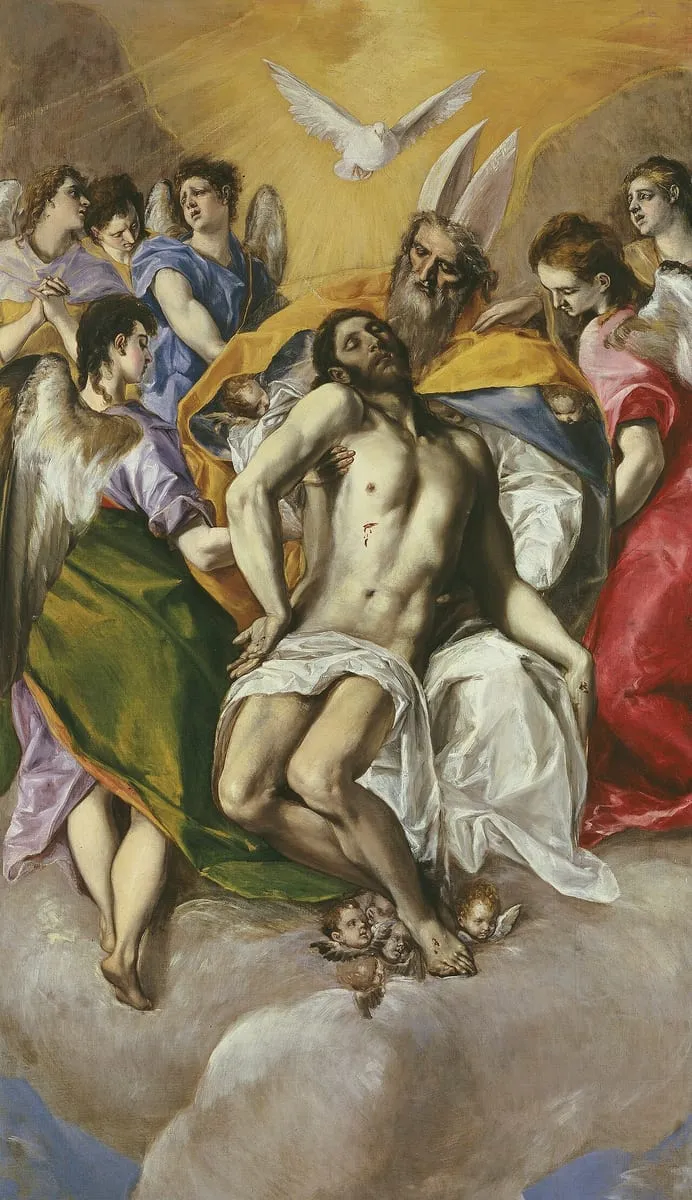
Descended into hell is the line that puzzles people most. It does not mean Jesus went to the place of the damned or suffered there. In the Bible, hell here translates the Hebrew Sheol and the Greek Hades: the realm of the dead, where everyone who had died before Christ awaited the Redeemer, the just and the unjust alike (CCC 632-633). Heaven had not yet been opened.
So the line says three things. First, Jesus really died; He went where the dead go. Second, He went there not as a prisoner but as Savior, to proclaim the good news to the dead (CCC 634-635). St Peter writes that Christ went and preached to the spirits that were in prison. Third, He freed the just who had gone before Him, opening heaven's gates for them (CCC 633, 637). Eastern icons show this scene: the risen Christ standing on the broken doors of death, pulling Adam and Eve out of their tombs by the wrist.
Then comes the heart of the faith: on the third day He rose again. The Resurrection is a real event in history, attested by witnesses (CCC 639). The tomb was found empty, first by women, in a culture that gave women's testimony little weight (CCC 640-641). Then Jesus appeared to Peter, to the Twelve, and to more than five hundred people at once (CCC 642).
Could the disciples have imagined it or invented it? The Gospels show them doubting, frightened and slow to believe, even thinking they saw a ghost (CCC 643-644). These were not men ready for a hallucination. And they gave their lives for what they had seen. People die for things they believe are true; they do not die for a story they know they made up.
The risen Jesus is not a ghost and not a revived corpse. He eats with His friends and invites them to touch His wounds, yet He also appears in locked rooms. He has entered a new, glorified life that death can never touch again (CCC 645-646).
Why does this matter? Because the Resurrection confirms everything Jesus said and did, including His claim to be God (CCC 651, 653). And it is the beginning of our own future: Christ is the firstfruits of them that sleep (CCC 655). Where He has gone, He means to bring us.
Key points
- Hell in this line means the realm of the dead (Sheol or Hades), not the hell of the damned.
- Christ went to the dead as Savior and freed the just who had gone before Him.
- The Resurrection is a real event with an empty tomb and many witnesses.
- The risen Christ has a glorified body, and His rising is the pledge of ours.
The Word of God
Because Christ also died once for our sins, the just for the unjust: that he might offer us to God, being put to death indeed in the flesh, but enlivened in the spirit, In which also coming he preached to those spirits that were in prison:
And as they were afraid, and bowed down their countenance towards the ground, they said unto them: Why seek you the living with the dead? He is not here, but is risen. Remember how he spoke unto you, when he was in Galilee,
But now Christ is risen from the dead, the firstfruits of them that sleep:
Catechism paragraphs for this lesson
- CCC 631-637
- CCC 638-644
- CCC 645-647
- CCC 651-655
CCC means the Catechism of the Catholic Church. Saints Light teaches it in its own words and never quotes it. Look up any paragraph in a printed copy or at vatican.va. See every lesson by paragraph in the Catechism index.
From the tradition
Q. On what day did Christ rise from the dead? A. Christ rose from the dead, glorious and immortal, on Easter Sunday, the third day after His death.
Live it this week
Read 1 Corinthians chapter 15 this week, the oldest written account of the Resurrection witnesses. Then, on Sunday, greet someone with the old Easter words, Christ is risen, or simply thank God at Mass for the empty tomb.
Check yourself: three questions
1. In the line descended into hell, what does hell mean?
- The place of eternal punishment for the damned
- A symbol for Jesus' sadness on the cross
- The realm of the dead, Sheol or Hades
- Purgatory
Show the answer
The realm of the dead, Sheol or Hades. Scripture calls the abode of the dead hell, Sheol in Hebrew or Hades in Greek (CCC 633).
2. Why did Christ go down to the realm of the dead?
- To be punished in our place for all eternity
- To proclaim the good news and free the just who had gone before Him
- To learn what death was like
- To condemn everyone who had died before Him
Show the answer
To proclaim the good news and free the just who had gone before Him. Christ went as Savior, proclaiming the Gospel to the dead and opening heaven for the just (CCC 634-637).
3. How was Jesus' risen body different from an ordinary revived body?
- It could not be touched at all
- It was a different body from the one that died
- It was only a vision in the disciples' minds
- It was His real body, now glorified and beyond death
Show the answer
It was His real body, now glorified and beyond death. The risen Christ invites touch and eats, yet His body is glorified and no longer bound by earthly life (CCC 645-646).
Words to know
- Sheol / Hades
- Hebrew and Greek words for the realm of the dead, where the dead awaited the Redeemer.
- Firstfruits
- The first of the harvest; Christ's Resurrection is the first of the resurrection of all who belong to Him.
More terms in the Catholic glossary. More passages in the Scripture index.
For catechists: a one hour class plan
Goal. The group should understand what "He descended into hell" means, that the Resurrection is a real event, and take to heart that Christ's rising is the pledge of their own.
Opener. Ask: "When you say the line He descended into hell, what have you pictured?" Many will admit confusion. Tell them this is one of the most misunderstood lines of the Creed.
Discussion questions
- What does hell mean in this line of the Creed? [The realm of the dead, Sheol or Hades, not the hell of the damned. Christ went as Savior to free the just.]
- What reasons does the lesson give for believing the Resurrection really happened? [Empty tomb, many witnesses, changed apostles. Do not overload with apologetics.]
- What is different about the risen body of Jesus? [Glorified: real, could be touched, yet no longer bound as before. Not a ghost and not a resuscitated corpse.]
- How does Christ's Resurrection change the way you face death and grief? [He is the firstfruits (1 Corinthians 15:20). Be gentle with anyone recently bereaved.]
Activity. Read Luke 24:1-12 aloud together. Then in pairs (8 minutes), each person tells their partner about someone they loved who has died, and the partner simply listens. Close the activity by saying together the Easter greeting from the lesson: Christ is risen.
Closing prayer. Risen Lord Jesus, You went down among the dead to set them free, and You rose in glory on the third day. We entrust to You all our beloved dead. Fill us with the hope of the Resurrection, and make us witnesses to Your new life. Amen.
Timing. Opening prayer 5 min, opener 5 min, read the lesson together 15 min, discussion 18 min, activity 12 min, closing 5 min.
Related lessons
- The Cross and Resurrection: How We Are Saved (Start Here, free)
- Did Jesus Really Rise from the Dead? (Hard Questions)
Keep your place in the app
The Apostles' Creed, Line by Line is free in the Saints Light app too, where you can mark each lesson done, take it as a guided class and keep notes.
Every course is open free for your first 14 days. After that, one payment of $14.99 unlocks every course. There is no subscription.