 Saints Light
I believe in the Holy Spirit
The Holy Spirit is God, the third Person of the Trinity, sent to be our helper and to make the Church holy. He prays in us and shows His presence in real, visible fruit.
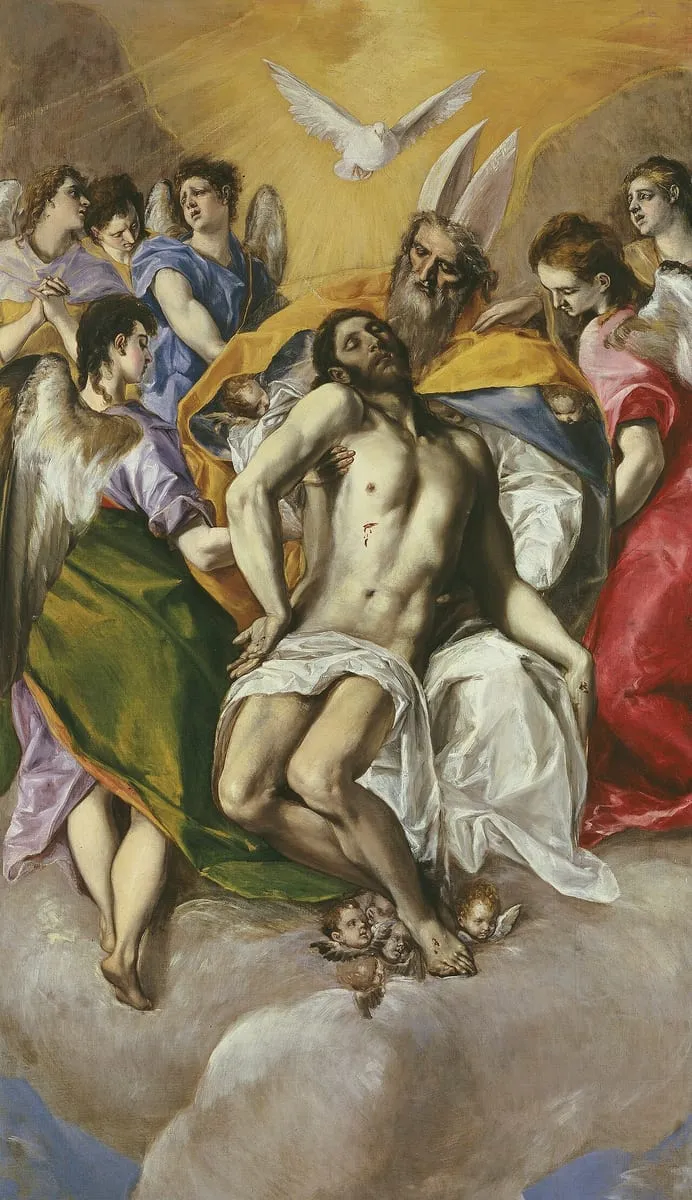
The third part of the Creed begins. To believe in the Holy Spirit is to profess that He is one of the Persons of the Trinity, fully God, worshipped and glorified together with the Father and the Son (CCC 685). He is not a force, an energy or a mood. He is Someone. That is why Christians say He, not it.
Jesus gave Him a name: Paraclete, literally one called to your side. The word covers advocate, helper and consoler (CCC 692). Jesus also called Him the Spirit of truth, who would teach the apostles all truth. Scripture gives other titles too: Spirit of the promise, Spirit of adoption, Spirit of Christ, Spirit of the Lord (CCC 693).
Because we cannot see the Spirit, Scripture uses images. Water, for new birth in Baptism. Anointing with oil, for strength and mission. Fire, for His transforming energy. The cloud and light. The laying on of hands. The dove that came down on Jesus at His baptism (CCC 694-701). The Church still uses many of these signs in her sacraments.
The Spirit was at work long before Pentecost. He hovered over the waters at creation, spoke through the prophets, and overshadowed Mary (CCC 702). But at Pentecost, fifty days after Easter, He was poured out on the Church in a new way, and the Trinity was fully revealed (CCC 731-732). Ever since, He builds, animates and makes holy the Church (CCC 747).
As the Nicene Creed is prayed in the West, it says the Spirit proceeds from the Father and the Son. The Eastern Churches say from the Father, and through the Son. The Catholic Church understands both traditions as expressing the same faith from different angles, when rightly understood (CCC 246-248).
What does the Spirit do in you? He prays in you when you do not know how to pray (CCC 741). He gives seven gifts: wisdom, understanding, counsel, fortitude, knowledge, piety and fear of the Lord (CCC 1831). And He produces fruit you can actually see. The tradition counts twelve, following the old Latin Bible that the Douay-Rheims translates: charity, joy, peace, patience, benignity, goodness, longanimity, mildness, faith, modesty, continency and chastity (CCC 1832).
Key points
- The Holy Spirit is a divine Person, worshipped and glorified with the Father and the Son.
- Jesus called Him the Paraclete, the helper and advocate at our side, and the Spirit of truth.
- He was poured out at Pentecost and now builds and sanctifies the Church.
- He prays in us, gives seven gifts, and produces visible fruit in our lives.
The Word of God
But when he, the Spirit of truth, is come, he will teach you all truth. For he shall not speak of himself; but what things soever he shall hear, he shall speak; and the things that are to come, he shall shew you.
Likewise the Spirit also helpeth our infirmity. For we know not what we should pray for as we ought; but the Spirit himself asketh for us with unspeakable groanings.
But the fruit of the Spirit is, charity, joy, peace, patience, benignity, goodness, longanimity, Mildness, faith, modesty, continency, chastity. Against such there is no law.
Catechism paragraphs for this lesson
- CCC 683-686
- CCC 691-701
- CCC 731-741
- CCC 246-248
- CCC 1830-1832
CCC means the Catechism of the Catholic Church. Saints Light teaches it in its own words and never quotes it. Look up any paragraph in a printed copy or at vatican.va. See every lesson by paragraph in the Catechism index.
From the tradition
Q. Why did Christ send the Holy Ghost? A. Christ sent the Holy Ghost to sanctify His Church, to enlighten and strengthen the Apostles, and to enable them to preach the Gospel.
Live it this week
Read the list of the twelve fruits of the Spirit once a day this week. Pick the one you most lack, and before each meal pray: Holy Spirit, grow this fruit in me.
Check yourself: three questions
1. Why do Christians call the Holy Spirit He and not it?
- Because He is a divine Person, not an impersonal force
- Because the word for spirit is masculine in every language
- It is only a habit with no real meaning
- Because He is a created angel
Show the answer
Because He is a divine Person, not an impersonal force. The Holy Spirit is one of the Persons of the Trinity, consubstantial with the Father and the Son (CCC 685).
2. Which of these is one of the seven gifts of the Holy Spirit?
- Wealth
- Popularity
- Fortitude
- Good health
Show the answer
Fortitude. The seven gifts are wisdom, understanding, counsel, fortitude, knowledge, piety and fear of the Lord (CCC 1831).
3. What happened at Pentecost?
- The Holy Spirit existed for the first time
- Jesus ascended into heaven
- The apostles wrote the Creed
- The Spirit was poured out on the Church in a new way
Show the answer
The Spirit was poured out on the Church in a new way. At Pentecost, Christ's Passover was fulfilled in the outpouring of the Spirit and the Trinity was fully revealed (CCC 731-732).
Words to know
- Paraclete
- One called to your side: helper, advocate and consoler, Jesus' name for the Holy Spirit.
- Filioque
- Latin for and the Son, added in the West to say the Spirit proceeds from the Father and the Son.
More terms in the Catholic glossary. More passages in the Scripture index.
For catechists: a one hour class plan
Goal. The group should understand that the Holy Spirit is a divine Person who builds and sanctifies the Church, and take to heart that He prays in us and bears visible fruit in their lives.
Opener. Ask: "If you had to describe the Holy Spirit to a child, what picture would you use?" Collect a few: a dove, fire, wind, breath. Note that the Bible uses all of these.
Discussion questions
- Why does it matter that the Holy Spirit is a Person and not a force? [We can pray to Him, be guided by Him. Worship and glory with the Father and the Son.]
- Paraclete means helper and advocate at our side. When have you needed an advocate? [Connect to the Spirit's help in hard moments.]
- Romans 8:26 says the Spirit prays in us when we do not know how to pray. What comfort does that give? [Very helpful to people who feel they pray badly or not at all.]
- Which of the fruits of the Spirit (Galatians 5:22-23) do you most need right now? [Make it personal and honest.]
Activity. Hand out the list of the twelve fruits and the seven gifts of the Holy Spirit. Each person circles the fruit they most lack (3 minutes). In pairs (8 minutes), each shares their fruit and the partner prays a short prayer for them aloud or silently: Holy Spirit, grow this fruit in my friend.
Closing prayer. Come, Holy Spirit, Helper and Spirit of truth. Pray in us when we have no words. Make the Church holy, and make each of us holy too. Grow Your fruit in our lives, especially the fruit each of us needs most this week. Amen.
Timing. Opening prayer 5 min, opener 5 min, read the lesson together 15 min, discussion 18 min, activity 12 min, closing 5 min.
Related lessons
- The Holy Spirit and Grace (Start Here, free)
- How Did the Church Begin? (Church History)
- Why Did East and West Split? (Church History)
Keep your place in the app
The Apostles' Creed, Line by Line is free in the Saints Light app too, where you can mark each lesson done, take it as a guided class and keep notes.
Every course is open free for your first 14 days. After that, one payment of $14.99 unlocks every course. There is no subscription.